I am a PDF!

The Understanding the Self course made me look into and examine myself deeper than I ever did before. In this subject, I have realized the importance of journalizing my emotions and experiences. And indeed, such activity helped me cope up in every situation that I had. That is why I am really thankful for the blog that I have because I can do just that. Whenever a blog entry requirement comes, I always take time to collect and reflect myself. My joy, my pain, my shining moments, and my humbling realizations – I collect them all and put them into writing.

And in this integrative blog entry, I will do my best to describe my self by answering “Who am I?” But as I narrate the instances that brought me to these descriptions, I also consider the fact that all of these may change throughout the course of my life – especially that I am just transitioning from being an adolescent to being a young adult. I still have a lot to explore. The world is yet a bigger stage for me to act on. But for now, I can proudly say that I am a PDF! I am not pertaining to a file format though. Rather, I would like to refer myself as a player, a dreamer, and a fighter.

I am a player!

I am a player in the huge social stage of this world and Urie Bronfenbrenner’s theory of ecological child development helped me to realize this. The most important learning that I have incorporated into my own development is that a large chunk of who I am right now is a product of my progressive and regular interactions with those who are very close and dear to me. My family, my friends, and as well as my peers in school and the community are crucial in molding the “me” that I am right now.

My inclination and passion for learning, my devout faith in God and in the Catholic Church, my active participation in our ecclesial organization, and a majority of my personality were established in me by my family’s intervention and nurturing. They taught me how to pray. They showed me the importance of obedience and respect to the everyone – not only the elderly and the authorities. And they emphasized to me the value of learning and education in shaping my future. That is why I can say that because of them, I am a grade-conscious yet industrious student. Also, the fact that I grew up in a family who can sing and play certain instruments has helped in planting a seed of talent that I didn’t know I have when I was young: I became musically-inclined.

Of course, I cannot move on with my life being only with my family. I have undergone different processes of individuation through my interactions with other people: my classmates, my teachers, other family members, and all kinds of people in the neighborhood. And that’s when I have developed even more the characteristics that were already inculcated in me. I started enhancing my singing. I considered practicing basic keyboard. I also became aware that I have a wide academic potential and used it to excel in class and to finish school years with honors and spots in the top ten rankings. This stage of my life further strengthened my role in the social stage as an academic achiever and a creative person as well in a musical way.

High school came and a greater world welcomed me. It was then when I was introduced into the church organization by my family, but most of my development as a member and an eventual leader was brought up by my ates and kuyas (not necessarily by blood) who became my mentors and friends. I discovered even more potentials that I didn’t know I could do. I started telling stories in front of kids. I began giving sessions to my fellow youth. I had led kids, youths, and adults alike into worship. I started dancing – with simple steps though. All of these were simultaneously ingrained with me along with my passion for the Filipino language by writing news articles in our school publication, my ability to teach my fellow classmates different lessons from different subjects just like what teachers do, and eventually my initiative to lead people in different organizations like our school choir, student council, the school publication, and the community-based church organization. In each group that I led in different parts of my life, I have practiced the sense of vision for those that I am leading.

Through the years, my interactions with my family, my peers, my friends, and possibly my crushes and love interests, have helped me develop this multitude of player roles that I carry in this social world. And every time I step from a scene (or context with respect to Bronfenbrenner) to another, my role and functionality changes. They may sometimes be as confusing and intertwining as they may get, but I am grateful for all these roles that I play because they define a majority of who I am in this social world. With that, I am Jomar: a family-oriented person, a devout faithful, an academic achiever, an amateur artist, a good friend, an active listener and follower, and a visionary leader.

I am a dreamer! 

I am a dreamer with full of aspirations in life that I want to achieve. Portraying the roles I mentioned earlier makes me desire to accomplish goals related to such roles. In a certain way, doing each and every role one take at a time fulfills this sense of purpose that I have, and that drive keeps my life worthy of living. Dan McAdams’ explanation of the social actor, the motivated agent, and the autobiographical author helped me understand why I am doing all that I am doing with my life. I can’t help but ask myself every now and then, “What’s the point of doing all of these?” especially in times that I feel down and demotivated. But now, I can see to myself the life story that continues to unfold with all the things that I have done and achieved.

There were different points in my life when I began to think how I would like to narrate my story. What will my life story be about? Will it be a life story of continuous struggle to a lifelong achievement? Will it be a simple coming-of-age story, in which I gain wisdom as I journey on with my life? Or will it be an initiation story, in which I am seen as weak at first but then marches on to improve myself and ultimately be successful and be a man full of righteous virtues? To be honest, I still do not know for sure how I would like my story to be. But so far, one thing is certain. I would like to have my life story be written about a man who is defined not by the things that he achieved in life, but by the good things he has done to everyone around him. I still do not know how I will get to that point in my life when my story would be written like that. But I can see with all the roles that I am playing what I envision myself to be.

Image credits to Success Magazine | URL: https://www.success.com/15-inspiring-quotes-about-being-a-dreamer/

And more importantly, I am in a lifelong objective of gaining enough confidence, fulfillment, and integrity to tell to the whole world my life story. A lot were the times when I asked myself whether my story is interesting enough or not. Are my experiences and important points in my life significant enough to make an impact on other people? Will others pick up something from my narrative? In other words, will people like my story? That is why all these roles that I am playing – being a family-oriented person, a devout faithful, an academic achiever, an amateur artist, a good friend, an active listener and follower, and a visionary leader – are encapsulated in an overarching goal of mine to understand myself, narrate and share my life story, and hopefully to inspire different people using my life story. That is my dream for myself as a lifelong dreamer.

I am a fighter! 

I may have mentioned earlier that I often ask myself if my story would be interesting to other people. In fact, there were times that I thought to myself that my life was pointless, that there is no flavor to my story, and that living in this world would not make much of a difference. Different aspects of my life may seem to conspire in an attempt to make me ruminate about this – whether some of these aspects are from within myself or from the outside called the society and structure. 

Looking back on my “The Perfectionist Within” blog entry reminded me of how my thinking, feeling, and mindful selves worked together to create an expectation of my self to be perfect in everything I do, even to the point of burnout. This was the point in my life when I thought to myself, “How dare me to share my testimony of academic excellence if I cannot prove myself to be one of the outstanding students at least in our block?” Even now that it is the end of the semester, there is still something within that pressures me to push myself in order to prove my high school prestige. This infuses fear that my high school success story will be invalidated simply because of the hardships of my collegiate life. But then, as a fighter against forcing myself to be perfect, I have to be as authentic and real as possible if I want to be fulfilled. I started to seek help from my classmates whom I believe can help me. I said to myself that it doesn’t undermine my abilities. In fact, seeking help improves my ability by learning from those people whom I can treat as mentors and study buddies at the same time.

Image credits to Quoteistan | URL: https://www.quoteistan.com/2015/03/grades-dont-measure-intelligence-and.html

As to the external factors, I myself have experienced being a victim of inequality especially in terms of age. In the church organization that I am in, members and leaders alike are usually divided into peer groups called “households” in order to create a family in the community. And believe it or not, for the past seven years that I have been part of the community, I was always grouped into a household in which I am the youngest. As I frankly say, “forever na akong bunso”. Yes, we all say that age doesn’t matter. But a lot of times and even until now, I see it the opposite. From time to time, the actions and words of my ates and kuyas send connotations that I am still too young to deal with certain things, to hear certain stories, and even to take up certain roles and tasks. As for me of course, I get hurt because I have thought that this group that I am in will accept me and uphold me for who I am. But then I guess, there is really this transparent glass ceiling that hinders me from being one in their circle because of my age. However, there is this one kuya of mine that kept reminding me not to be intimidated of my elders – not to be afraid of reaching out to them. Being in a church organization, he made me remember this passage: 

Don’t let anyone look down on you because you are young, but set an example for the believers in speech, in conduct, in love, in faith, and in purity. 

 1 Timothy 4:12.

And from then on, I began saying to myself that I will not let anyone treat me as a kid anymore. I worked hard and did the best what I can in the community to fulfill my mission despite my young age. This passage has always been my motivation to use my agency amidst the reality of oppression that I face in the community.

Despite all the doubts and oppression, I continue to fight back with a conviction that I have a story to tell, and my life is worth it. Just as how we see the life of every human person as significant, I also see my life as something of great value, thus something that must be shared with everyone. And I commit to myself to be strong and brave as I face even more challenges that may arise ahead. That is how I myself become I fighter.

Concluding Words

With that, I am grateful for this “Understanding the Self” course because it made an opportunity for me to check, to fix, and to upgrade myself from time to time. And doing blog entries like this makes me look back memory lane and compare those memories with what I am right now. I can visibly see that there are differences. And as I go on with my life, updates to my life story will unfold. But I am confident that as long as I seek to understand the world that I am living in, as well as the inner force that I have within, I can use both of them in my realm to produce a worthwhile life story that hopefully other people will appreciate and be inspired from.

And again, I am Jomar, and I am a PDF – a player, a dreamer, and a fighter.

Twitter and the Masked Self

Image result for twitter logo with megaphone

Ahhh, Twitter! I can’t resist opening it every time I access the Internet. It brings me pleasure when I am able to scroll down my feed, check my notifications, and see the likes and replies of my followers. I also feel satisfied when I am able to tweet my own thoughts and feelings about the things I love, the things I hate, and the things that I cannot really express how I feel about them. But most of all, I can feel my truest self when I am online.

That is quite a lift for me since I can show who I really am and how I really feel. But what bothers me is what if I am outside Twitter. What if I really am with other people – even the people I even despise? Would I display the same kind of hate? Or will I just put a mask on my face that shows everything is fine as if nothing is boiling inside? What if I really want to say something out of extreme distress over a certain issue? Would I burst my emotions in front of so many people? Or will I hold my peace and be silent about it? Yes, I found Twitter as my alternative avenue in expressing my feelings and emotions. But I also believe that leaning only on Twitter will not solve whatever conflict I have.

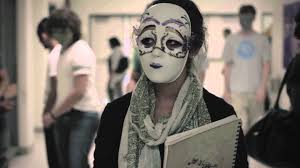
Screen capture from the short film “Identity”

I can relate to that question especially back in senior high school, when my image and what other people think of me extremely mattered. It seemed to me that I had been so passive when dealing with other people face to face. As hard as I can, I tried to distance my social self from my toxic Twitter self. I did my best not to discharge any true feeling that comes from inside me – may it be extreme joy, sadness, anger, disgust, or fear. I was quite afraid of firmly standing up for what I felt and believed because of fear of tarnishing my image, putting friendships at risk, and feeling left out for it. I would rather conform with my peers’ preferences or let it pass and let my own convictions be suppressed; at least we stayed friends, as far as I knew. It led me into a feeling of having a void in me. Something lacking in me – like a conviction or a role that makes me distinct for others. In Tagalog, para akong naging sunud-sunuran sa gusto ng iba. I had been portraying “false roles” for so long just to preserve my image and my friendships.

Related image

And that’s when Twitter came to the rescue. Whenever I felt that I no longer had a voice in the society, I would turn to Twitter to gush out my emotions. Whenever I could not speak my heart out, Twitter would scream it loud for me. From all the simple rants about my bad day, my bad experience with my commute, up until thoughts of pity and disappointment in myself. With all the tweets I tweeted for like a year or so, what was running on my mind was that I had to be noticed by my peers and friends because it seemed that I was not given much attention or voice. Overall, I treated Twitter like a daily diary, a freedom wall, and also a megaphone for my thoughts. It was as if I had unmasked myself through Twitter. In Twitter, I can breathe; I can scream; I can unleash the beast inside me. So that when I deal with other people, I could control myself and the “mask” that I was wearing. 

But now, I decide to change. Now, I will rise up from the vicious current that I had been following for so long in my life. I am tired of wearing my mask of submission, of suppression, of self-neglect. I am tired of not being who I am just for the sake of getting other’s appreciation or attention. Also, I am tired of only counting on Twitter to speak out for me. I am tired of having this unreal voice that I have. I have to get out there and stand on my feet, and I need to stand strong. I have to break the chains that bind me from my courage to be my own self. And this entry is how I start my journey towards liberty and identity: recognizing that time will come when I cannot breathe with the same mask I was breathing with before. It will then suffocate and kill the “me” that I have deep inside. I have to come out and will to be that self which I truly am – not just a puppet of my friends and peers. Yes, Twitter is there to voice out my emotions. But I myself have to go beyond just tweeting to achieve my individuality. I have to get out, be proactive, and be involved in my interactions. Ayaw ko nang maging sunud-sunuran muli; gusto kong masunod ko rin ang nilalaman ng kalooban ko. 

Image result for standing while rowing the boat
Image credits to Standup Journal Magazine

And this is a commitment that I would like to swear to myself. I will not allow myself to be tired just being a “slave” for others’ attention. I will not allow myself to isolate myself with the fake voice I have with Twitter. And I will make sure to myself that I will build my identity, and I will make my voice be heard. For William Henley has said, “I am the master of my fate; I am the captain of my soul.” In the same way, it is only I who can control my life and build my own self. My own authentic role in the bigger social stage of this world is the only role I have to play and nothing else, which I am currently in a constant pursuit as an adolescent.

As for Twitter, I will keep my account. But I will not dwell on it as much as before. I know I have a lot of more important things to attend to. That includes fostering relationship with my peers here in college, starting with my block mates. And I am proud to say that I am extremely grateful to be with my block. They make me feel free and at home in the Ateneo. Hence, the Twitter header. ^_^ ❤

The Elderly and PILKAN: The Self in Response to Society

IMG_20181013_133230
Image captured by the blogger

October 13, 2018 has been marked as one of my most memorable experience as a freshman here in the Ateneo. I never realized that I will get to spend some time outside the Ateneo community and in the real world with people of different experiences. Nevertheless, this encounter with the elderly is something that I will cherish.

What I Have Observed

One of the first observations that I noticed in the area engagement is the habit of the elderly of telling so many stories about their lives and experiences. For me personally, it is not usually my habit to tell random stories of my life even to some of my friends. Maybe it is because I have to use the time it would take for me to tell my stories to just study or work instead. But for some reason, people with mature ages do not seem to run out of stories. And they tell stories for different reasons. As for me, I see their stories as potential narratives that will greatly impact with my view of the world. Their stories of struggle and perseverance to face life challenges have made me realize that the world that I am living in may not be that close to being purely good, but a lot better than what the elderly had experienced before.

The Toil for a Better Life

Pillow vendors in the 20th Century Philippines. 
Photo from LOPEZ MUSEUM AND LIBRARY/FASHIONABLE FILIPINAS  

I can never forget how hard life was for them back then. Stories of struggles like not being able to finish education, having arranged marriages and having to escape home to evade such a painful fate, and not being able to eat three times a day just to earn and save money for the needs of their family really touched me. Most of the nanays that I have met and their families were not well-off when they were young. That already sets them in a societal structure wherein they are not so privileged. Hence, they really have to work really hard for their living, as well as their parents’ and siblings’. But what captivates me is that these nanays were in turn working overtime, even working harder than their parents, so that their own children can go to school, finish education, and live a better life. They aimed for their children not to experience the hardships that they themselves had gone through. It kind of reminds me a cliche yet a powerful statement which parents would always say: 

“Hindi na bale kung mahirapan ako. Ayaw kong pagdaanan mo ang masasakit ng nakaraan ko, kaya ko ginagawa ang lahat ng ito.” 

This statement depicts an agency within the elderly that they wanted to exercise. Amidst their unfortunate location in the social structure, despite the discrimination that they faced because of their insufficient education, they did what it took them so that their children can eat well and study well. Indeed, they were placed in a quite terrible situation, but they understood that it is not the end – to their descendants at least. The nanays and their families were placed in a social structure, and that structure drove them to exercise agency and to do great things for their children. Now, they have been really proud to say that their children work in government offices such as SSS and even local and international companies. Their children also in turn give back to the nanays by regularly visiting them and talking to them over the phone from time to time to name a few.

Age and Worth? Not a Problem!


Photo by AleksandarNakic/Getty Images

And now that they are at their ripe ages, they are entering into another struggle of finding their worth and contribution in the society as part of the elderly sector. Whether or not we accept this, but it is a fact the the elderly are undermined in the community because of their limited physical capacity. They get weaker, more sick, and more sensitive. That is why people usually leave them at home so that they can “rest”. Such prejudice and exclusion of the elderly from the outside world has made the nanays think even about their deteriorating worth in society. Again, they were set in a part of the societal structure wherein they are oppressed not in the way that they are persecuted or hurt, but because society see them as useless and only good at home – or worse, a liability. But that didn’t stop them from doing productive things to uplift their fellow elders and make a sounding voice for the community to hear. Hence, PILKAN was established.

The Pinagsamang Lakas at Karaunungan ng Nakatatanda (PILKAN) is an organization of elderly and senior citizens based on Quezon City that aims to promote the lives and wisdom of elderly through different livelihood programs like rag making and activities like outings and swimming.

I am really amazed on how the members of PILKAN continuously find ways to have fun and make the most out the remaining years of their life. They conduct meetings and activities for all the elderly and senior citizens to join and participate. And because of this, not only they can get the most out of their seniority, but they can also foster relationships and promote brotherhood and sisterhood among people of their age. With all of these that they can do, agency is clearly shown at every member of PILKAN. How the overall society views them because of their ripe age does not stop them from being active, proactive, and productive in the community.

Takeaways from this Experience

The BINHI area engagement in PILKAN was a fruitful experience for me because I had learned about all of these, and have enriched even more my understanding because of the concept of habitus, structure, and agency. Overall, I have learned three very important things:

Filipino woman. Photo by Bo Insogna.

We cannot change reality, but we can change how we respond to reality. We can just complain about the challenges of our lives and ask in despair why we are so unfortunate in the oppression that we experience. Or we can also use our agency to guide ourselves and make us stronger amidst all the forms of inequality and prejudice. The whole world awaits us in all the privileges and opportunities in store. We just have to go out and find them.

We need to value the role of the elderly in our community. Most people would think that being a senior citizen entails always being at home and resting because of whatever sickness a senior may have. But what is undermined is their ability to give sound advice and wisdom when facing life. What is more is that they can actually contribute well to our community if we would just allow them and reach out to them.

Grandparents and Grandparents Day! Photo by the Philippine Gazette

And lastly, We must value the hard work that our parents have done for us. Yes, we may at times be at conflict with our parents. In fact, we may hate them for a number of reasons. But little do we know the hidden struggles and challenges that they have to face in order to provide what is best for us. Their love for us explains their willingness to cross oceans and run through fire in order for us not to experience the bitterness of life that they have experienced before. We just have to reach out to them and understand. And so that as they grow old, we can see the importance of giving back to them who have given so much for us.

Development of Self and Identity: A Reflection

Sigmund Freud and Erik Erikson may be different psychologists who contributed different theories. But they served as foundations of knowledge and understanding of how people develop themselves and eventually form their identities that will pretty sum up their whole lives. Freud described the formation of a person being instinctive and biological through his Psychoanalytic Theory. Erikson, on the other hand, explained the importance of the social aspect in a person’s growth through his Eight Stages of Psychosocial Development.

This module for me, by far, is the most mind-blowing simple because it is so relatable to me. The two concepts vividly explained how we are developed into building ourselves and our identities, which stresses out that childhood is the most crucial part of a person’s life. And since I have already gone through my childhood, all of the discussions either from Freud’s or Erikson’s theory have been so relatable to me. Although, some key points, especially from Freud’s theory, are really disturbing when I think about it.

This slideshow requires JavaScript.

Looking at the psychosexual stages made me revisit my childhood when my affection was concentrated either to my mom or to my female yaya who was taking care of me. Also, it made me realize that my grade school years were actually the time when I felt the least concerned with pleasure and my sexuality. Rather, I was very focused on my studies and my childhood activities. But now, I am more conscious of my maleness, my sexual behavior, and even my feelings and attitudes towards women of my age.

On the other hand, Erikson’s theory of psychosocial development has introduced me to the concept of crisis as exploration. In each of the eight stage, we explore. And in the adolescent stage, we start to form our own identity as we achieve stability and generativity in adulthood. I, myself, am in a continuous quest to find my identity – to find my place in this society, in the world. Through high school and college, I am on my feet in searching for who I am even if it entails rejections from other people, doubts that I harbor in myself, and hesitations in trying new opportunities to grow.

It was just so timely as well that my BINHI area engagement with the PILKAN elderly happened in the period of this discussion. It opened to me a brand new insight about the seniors that they can still be part of the generative portion of society. By default, those in their advanced age are seen as those who either look back into their lives and are ready to move forward and move on (ego integrity) or regret those who have done something that they should not or did not do something that they should have (despair). But what the nanays and tatays have made us realize that even in their advanced age, it is not yet too late to live out their identity and their contribution to our community. That is why they established PILKAN – to unite the elderly into a conviction that they can still do generative activities with their “Pinag-isang Lakas” while imparting knowledge to the younger people like myself with their “Karunungan ng Nakatatanda”. And hence, the name of their organization.

As I end, I would like to share a piece of advice from one nanay that I will firmly hold on to as I live the days of my life.

Your vision of the world is an image of yourself.

Her quote reminded me that how I view the world around me really affects how I think about things, how I express my thoughts, how I do my actions, and how I live my life. And my worldly view can really affect my development and my quest for finding my identity. In addition, the essence of the saying somehow introduces me to the next module of the course, which will tackle my relationships that connect me to the outside – to the world that I am living in.

The Perfectionist Within

He wants everything to be smooth and well-planned. He freaks out when slight changes happen to him. He wants everything to be accurate. He wants to be seen as an ideal model for others to follow. And to achieve this ideal state, he wants to be versatile and well-rounded. He really wants everything within his reach. And he strives to achieve perfection in all the things that he does.

A Posture of Greatness. The blogger delivering his graduation speech at the 1st Division-Wide Commencement Exercises in Makati City, April 5.

Many people say that he is “one-of-a-kind”. In high school, many would say that he is great in many things. He can be seen all around the school doing entirely different things – acing tests in science and math, being a news editor in a school publication, being a student council officer, and leading a choir to name a few.  He seems to manage his time and effort to do all of those in a perfectly fine manner. Many would ask him how he balances all his responsibilities, not to mention being a son to his family, a friend to those who are close to him, an active youth leader in a church organization, and the top student in the graduating batch of a science high school where he was from.

But little do people know that oftentimes, this “one-of-a-kind” teenager would stress himself out finding ways on how to juggle all of his responsibilities. He needs to solve his problems of how to get things done, how to put things in the right place, and how to make people be satisfied with his performance. It came to a point that he rarely asks himself if he is still okay. More often than not, he thinks more about what would people say about his work. O course, he vividly recognizes his passion in doing those things. But he cannot help but gather some validations to keep going, may those be from other people or from the results of his works.

Surely enough, he has brought this kind of thinking into college when everything is already different. College continues to be a great period of adjustment to him – moving into a new culture, finding a place in a bigger environment, and encountering some people who are a lot greater and better than him in many ways. His automatic system of thinking immediately tells him to study harder and prove harder that he is great. He needs to do those because of three things.

  1. Firstly, he has to prove himself deserving of the peak that he has attained at the end of his high school journey. It was to the point of almost forgetting that all the other moments of his journey were daunting, complex, and extremely rigorous. He has to be at par with his contemporaries.
  2. Second, thanks to representativeness as well, being a math major in the Ateneo begets a lot of expectations on him being proficient in Mathematics. With him are a lot of math geniuses and wizards who have been in various competitions in and out of the country. All the more he feels the pressure because of that.
  3. And finally, being a scholar demands a high performance just by looking at the towering grade requirements.

The Perfectionist's Guide to Results
Credits to Ultica College for the image. Image URL: https://bolojawan.com/the-dilemma-of-being-a-perfectionist/

With greater expectations and higher stakes set upon him, fear is elicited about the possibility of not getting an A in any subject, not meeting the grade requirements, or worse, failing a subject. He knows that having those not so good grades would be a lot scary. And actually getting those would actually be something a lot more than miserable. He fears even more that it would also tarnish his hard-earned prestige from high school. Inside his mind, he believes that he must be outstanding. He must do well. Otherwise, it will be a failure. Consequentially, he consistently gets stressed and irritated when too much time is wasted in doing unnecessary things for his academics. He often stays up until the morning, even if he usually sleeps at 10 in the evening just to finish a certain assignment, digest fully a certain reading, and accomplish all his tasks for the day. As a consequence, most often his body has limited energy the next day. He would have a hard time waking up and staying energetic and attentive He gets frantic everytime he prepares for school. Otherwise, he will be late. And there also comes a point when he would just get annoyed for a very shallow reason, if there is any.

This is the challenge that he wants to overcome. He wants to get passed this certain point in his life when he has to push himself to the point of burnout just for the sake of self-validation and appreciation from others. He believes that always giving more is the best. But what he wants to aim for in the future is to realize the need to take care of himself. He needs to get rid some of his perfectionist attitude and accept himself the way he is. He will at some point commit mistakes or failures, and he needs to acknowledge it as a way of appreciating life and success. He needs to avoid ruminating and overthinking about the future should he commit detestable blunders. What he needs, rather, is to be mindful of what is happening today, to be focused on which tasks are needed to be finished, to fulfill one responsibility at a time, and to take his break and rest if needed.

He wants everything to be smooth. He wants everything well-planned. He freaks out when slight changes happen in the playing field. It’s because he wants everything to be perfect. He wants to be seen as a model for others to follow. He desires to be an example, and an example must be ideal. He wants to be versatile and well-rounded. He really wants everything within his reach. And he strives to achieve perfection in all the things that he does. However, it will not be for long. Of course, he will still strive to give his best and his all. But he will also aim to be mindful of his situations and to take care of himself. He promises to accept negativities and hardships in life. Plus, he will use those as catapults into the positivities and success he desires in the future. 

Pagsasanib ng Nakaraan at Kasalukuyan: Isang Pagkilatis sa Pelikulang Coco

Mga Nilalaman

Patungkol sa Pelikula

Isang Amerikanong computer-animated at piksiyunal na pelikula ang Coco. Nilikha ito ng Pixar Animation Studios at ipinalabas ng Walt Disney Pictures sa direksyon nina Lee Unkrich at Adrian Molina.  Hango ang pelikula sa Dia de Los Muertos, isang makabuluhang araw para sa Mehiko, kung kailan ginugunita ng bawat pamilyang Mehikano ang kanilang mahal sa buhay na namayapa na. Katulad ito ng Undas sa Pilipinas. Una itong ipinilabas noong ika-20 ng Oktubre taong 2017 sa Morelia International Film Festival at sa mga sinehan ng Mehiko nang sumunod na linggo bago ang mismong Dia de Los Muertos. Sumunod namang ipinalabas ang produksiyon sa Estados Unidos at dito sa Pilipinas noong ika-22 ng Nobyembre ng parehong taon.

Coco (Poster)
Ang poster ng pelikulang Coco na ipinalabas sa Estados Unidos | Karapatang-ari © 2018 ng Amazon.com

Tungkol sa isang batang nagngangalang Miguel Rivera ang kuwento ng pelikula. Mayroong masidhing pagmamahal si Miguel sa pag-awit at sa pagtugtog ng gitara, bagamat tutol dito ang kanyang buong pamilya. Nag-ugat ang kanyang pagnanais dahil sa paghanga niya sa namayapa nang personalidad sa musika na si Ernesto de la Cruz. Napunta siya sa lugar ng mga patay o Land of the Dead dahil sa kanyang pagkuha sa gitara ng namayapang mang-aawit sa musoleyo nito upang gamitin sa pagtatanghal ng bata sa isang patimpalak. At doon sa lupaing iyon nakilala ni Miguel ang kanyang mga ninuno na nakikita lang niya noon sa mga larawan. Doon din niya natuklasan ang samu’t saring katotohanang matagal nang nabaon sa hukay patungkol sa kanyang angkan.

Isang matagumpay na pagtatampok sa kulturang Latino at Mehikano[1] – iyan ang malimit na mababasa sa mga pagsusuri ng mga kritiko patungkol sa pelikulang Coco. Lalo pa’t mistulang nagkataon ang pagpapalabas nito sa isang napapanahong isyu noong 2017. Matatandaang ito ang taon nang ihalal si Donald Trump bilang pangulo ng Estados Unidos. Isa sa mga kontrobersiyal na usapin ay ang pagharang sa mga Mehikanong imigrante. Inilarawan niya sa kanyang kampanya at pagkapangulo ang mga naturang imigrante na tagapagdala ng krimen at droga sa Estados Unidos. Bilang pahapyaw para sa talakayan sa blog na ito, sa isang eksena ng pelikula mapapanood ang pagtakas ng isang yumao mula sa Lupain ng mga Patay kahit hindi siya pinahintulutan ng imigrasyon. Mistulang kapareho ng tagpong ito ang tunay na nangyayari sa kasalukuyan sa Hilagang Amerika.

Kung kaya’t kahit hindi sinasadya, nagsilbing daan ang pelikula upang ipakita ang kagandahan at impluwensya ng kultura at kasaysayan ng Mehiko sa iba’t ibang bahagi ng mundo sa kabila ng negatibong pagtingin sa bansa dulot ng nasabing sigalot.[2]

Ngunit hindi lang ang isyung ito ang patunay ng pagkakaroon ng bahid ng kasaysayan sa Coco. Sa blog na ito titingnan din ang iba pang mga aspekto ng pelikula at ang pagkakaugnay ng mga ito sa kasaysayan. Bibigyang-pansin ang mga sumusunod na pormal na elemento ng pelikula: tagpuan, kagamitan o props, at tauhan.

Bumalik sa itaas.


Lupaing Walang Humpay ang Paglago

Naganap ang karamihan sa mga eksena at kuwento ng pelikula sa tinatawag na Land of the Dead o Lupain ng mga Patay, kung saan nadala si Miguel matapos kunin sa kinalalagyan nito sa musoleyo ang gitara ng namayapang si De la Cruz. Dito napagtanto ng bida na totoo pala ang pinaniniwalaan ng kanyang angkan tungkol sa tradisyon ng Dia de Los Muertos. At sa kanyang paglalakad sa tulay papunta sa napakalaking lupain, dito niya natanaw ang mga nagsisitayog sa taas, nagsisikinang sa kulay, at nagsisikislap sa liwanag na libu-libong mga gusali kung saan nananatili ang mga yumao na kahit noon unang panahon.

Coco (Buildings)
Konsepto ng Isang Gusali sa Lupain ng mga Patay  sa Pagguhit ni Ernesto Nemesio | Karapatang-ari ©2017 ng Disney • Pixar

Kung kikilatisin ang bawat gusali ay makikita ang iba’t ibang istruktura na naging moda ng arkitektura ng Mehiko simula pa noong unang panahon. Makikita sa pagkakadisenyo ng mga matatayog na gusali sa Land of the Dead ang ebolusyon ng arkitekturang Mehikano.

Makikita sa bawat patong o palapag ng isang tipikal na gusali sa Lupain ng mga Patay ang iba’t ibang modelo at tanyag na mga istruktura ng Mehiko mula sa piramide ng mga sinaunang kabihasnan hanggang sa mga istruktura noong panahon ng pananakop, rebolusyong Mehiko, ika-19 at ika-20 siglo, at ng kasalukuyang panahon.

Sa isang panayam ng Inside the Magic, isang website na naghahayag ng balita patungkol sa mga kaganapan sa Disney, ikinumpirma ng tagapagdisenyo ng produksiyon ng Coco na si Harley Jessup ang pagsasakonsepto ng mga gusali sa Lupain ng mga Patay. Ayon sa  kanya, sumangguni sila sa kasaysayan ng Mehiko upang maging basehan ng mga gusali sa nasabing lupain, kung saan ang mga sinaunang yumao mula sa mga kabihasnang Maya at Aztec ay nagtayo ng mga piramide.[3]

Mayan Pyramid
Ang makasaysayang piramide ng Chichen Itza ng kabihasnang Maya | Karapatang-ari ©2009 ni Daniel Schwen

Habang umaakyat naman ng palapag, pasulong sa kasaysayan ang mga istrukturang itinayo, hango sa panahon ng pananakop, rebolusyong Mehiko, ika-19 at ika-20 siglo. At sa tuktok ay mayroong mga makabagong mga istrukturang may mga cranes na nagdadagdag pa ng mga palapag para sa mga paparating na yumao.[4]

Makikita sa disenyo ng iba’t ibang lugar sa Lupain ng mga Patay ang pagkakaiba-iba sa kung ano ang nakikita sa bawat lokasyon. Patunay rito ang piramideng bato sa ibaba, hanggang sa mga bakal na tulay at himpilan ng mga pampublikong sasakyan sa bandang gitna, at sa mga kotseng de-kable sa mga matataas na bahagi ng mga gusali.

This slideshow requires JavaScript.

Bumalik sa itaas.


Mga Maliliit na Bakas ng Nakaraan

Bilang pagpapatuloy, hindi lamang nakikita ang bahid ng kasaysayan sa mga naglalakihang gusali at istruktura. Maging sa maliliit na props o mga kagamitan ng mga tauhan ay mapapansin ang pagkakaiba ng pingmulan ng mga ito: mula sa mga nagdaang henerasyon hanggang sa kasalukuyang panahon.

Makikita sa isang bahagi ng pelikula ang kalumaan ng mga kagamitan sa loob ng tanggapan ng Department of Family Reunions, isang kagawaran sa Lupain ng mga Patay, bago pa umusbong ang teknolohiya ng ika-21 siglo: typewriters at mga makalumang kompyuter at kawalan ng mga cellphones at smartphones.[5]

Mapapansing typewriters at mga makalumang kompyuter ang kalimitang gamit ng mga empleyado ng Department of Family Reunions at hindi ang mga makabagong kompyuter na may mga flat screen monitor. Nagsimula ang pagsasakomersyo ng mga modernong typewriters taong 1874 matapos maimbento ni Chrisopther Latham Sholes noong 1873. Dito nag-umpisang umusad ang makabagong ideya ng mabilisang paglikha ng mga dokumento.[6]

Sa usapin naman ng mga kompyuter, noong dekada ‘70 nagkaroon ng pagbabago sa mukha ng mga ito nang ipakilala ang mga monitor na likha sa cathode ray tube. Sa parehong eksena sa pelikula, makikita ang isang kompyuter na katulad ng sa mga unang Macintosh na kompyuter na inilabas sa mga pamilihan taong 1984. Ipinakikita sa mga kagamitang mayroon ang Department of Family Reunions ang mundo ng teknolohiya bago pa lumabas sa merkado ang mga modernong liquid crystal display (LCD) na mga kompyuter noong 1997.[7]

Sa isang bahagi ng palabas, makikita rin ang iba’t ibang mga pagtatanghal sa isinagawang Battle of the Bands na nag-uugat sa iba’t ibang panahon: mga musikang saxophone na naging tanyag noong dekada ‘20 hanggang ‘60, ock mula pa noong dekada ‘50, musikang elektroniko at synthesizer mula dekada ‘70 hanggang sa kasalukuyan, at marami pang iba.

Inimbento ang saxophone noong 1840 ni Adolphe Sax. Bagamat noong dekada ‘20 at ‘30 lamang naging tanyag ang instrumento sa buong Estados Unidos dahil sa malawak na kakayahan ng isang C Melody Saxophone, ang pangunahing modelo ng sax noon. Bunsod nito, nangibabaw ang paggamit nito sa musikang jazz. Maging sa rock noong dekada ‘50 ay namumutawi rin ang tunog ng sax. Ngunit sa paghihiwalay ng mga identidad ng jazz at rock noong dekada ‘60 nagsimulang bumaba ang kasikatan ng musikang sax. Sa huli ay dumilim ang ningning ng musikang sax noong dekada ‘70s at ‘80s kapalit ng pag-usbong ng pop rock, disco, at eurobeat.[8]

Nag-ugat naman ang rock sa Estados Unidos sa anyong tinatawag na rock and roll noong dekada ‘50. Sa dekada ring ito nagkaroon ng pagbangong pang-ekonomiya ang bansa mula sa pagkakasadlak nito noong Great Depression at Ikalawang Digmaang Pandaigdig. Dahil dito, lumakas ang kakayahang bumili ng mga kabataan noon ng mga kantang rock at tumaas ang demand para sa naturang genre. Isa sa mga pinakatanyag na personalidad sa rock and roll si Elvis Presley (1935-1977). Sa dekada ‘60 naman umusbong ang folk rock, ang genre tanyag sina Bob Dylan, Pink Floyd, Cream, at The Beatles. Sa dekada ‘70 naman ang corporate o mainstream rock, ang genre ng Rolling Stones, Led Zepellin, at ni Bruce Springsteen. Nagsilbing tugatog ng pandaigdigang pagkakakilanlan ng rock ang dekada ‘80 at ‘90. Sa mga dekada ring ito isinilang ang teknolohiyang digital na ginamit din sa paglikha ng musikang rock.[9]

Samantala, noong dekada ‘70 umusbong at sumikat naman ang elektronikong paraan ng paglikha ng musika sa  paggamit ng Kraftwerk, Pink Floyd, at Led Zeppelin sa kanilang musikang rock. Kalimitang ginagamit noon ang elektroniko sa disco, isang tanyag na genre noong ‘70, at synthpop, na mas lumaganap noong ‘80s. Sa dekada ‘80s naging tanyag ang paggamit ng Musical Instrument Digital Interface (MIDI) sa paglikha ng mga bagong tunog. Musikong pangsayaw o dance music naman ang nanguna noong dekada ‘90s. Sa panahon ding ito lalong umusbong ang musikang elektroniko dahil sa pagkakaroon ng mga kompyuter sa mga tahanan at mga software tulad ng Fruity Loops (ngayon ay FL Studio) para sa mga nais lumikha ng musika. At sa ika-21 siglo naging sandigan ng halos lahat ng tugtugin ang electronic dance music o EDM na siyang sining nina David Guetta, The Chainsmokers, at marami pang iba.[10]

Bumalik sa itaas.


Mga Tauhan: Salamin ng Kultura at Kasaysayan

Para sa ikatlo at huling elemento, hindi na dapat pag-isipang mabuti upang malamang Mehikano ang mga tauhan nito gayong isang pelikulang hango sa kulturang Mehikano ang Coco. Sa kanilang pagkilos, isinasabuhay na kultura, at maging sa kanilang kasuotan  nasasalamin ang lantad na bahid ng kultura at kasaysayan ng Mehiko.


Ang unang punto para sa elementong ito ay ang matapang ngunit mapag-alagang abuelita (lola sa Filipino) ni Miguel na si Elena. Dahil sa mapait na kuwento ng nakaraan ng kanyang lola at matriyarka ng pamilya na si Imelda, masugid na ipinagbawal ni Abuelita Elena ang musika sa kanyang angkan, sa tahanan, at sa pinaliligiran nito. Isang epektibong armas na kanyang ginagamit sa pagsusuway sa mga nagbabalak magdala ng musika sa pamilya ay ang kanyang matibay na la chancla (“the flip flops” sa Ingles) na gawa sa matigas na katad o leather.

Coco (Mariachi)
Si Abuelita Elena at ang kaniyang matibay na La Chacla. Karapatang-ari ©2017 ng Disney • Pixar

Isang kaugaliang Mehikano, lalo na ng mga nanay at lola, ang gamitin ang kanilang la chancla bilang paraan ng pagdidisiplina sa kanilang mga anak na makukulit at hindi masuway. Sa isang sarbey na isinagawa ng The Harris Poll noong 2013, taon kung kailan nasa kalagitnaan na ang produksiyon ng Coco, higit-kumulang na 80% ng mga Hispanikong magulang ng 20,000 bata sa kindergarten ang aminadong ginagawa ang ganitong paraan ng pagdidisiplina. Sa isang pananaliksik naman ng Child Trends Data Bank isinasaad na natatangi ang mga Hispaniko sapagkat nakikita ng mas maraming babae kaysa sa lalaki ng naturang lahi na mahalaga ang paraang la chancla.[11]

Kapansin-pansin din ang mga makukulay at mabubulaklak na kasuotan ng mga babaeng yumao. Alinsunod ito sa moda ng mga kasuotan sa Mehiko na may pagkiling sa paglalagay ng iba’t ibang mga maliliwanag at masasayang kulay. Pagpapakita rin ito ng pagiging malapit ng mga Mehikano sa mga pagdiriwang tulad ng pista.

Coco (Featurette)
Isang screenshot na nagpapakita ng moda ng kasuotan ng mga yumao sa Lupain ng Mga Patay. Karapatang-ari ©2018 ng Disney Movies

Patuloy na nagtatakda ng iba’t ibang trend ang mga tradisyunal na kasuotan ng mga Mehikana. Naging inspirasyon din ito para sa iba’t ibang usong kasuotan kapag tag-init sa iba’t ibang lugar gaya ng Europa at Australia. Nagbibigay ang disenyo ng mga damit na ito ng malamig na pakiramdam sa katawan habang nag-aakit din ng atensyon dahil sa kulay at ornamentasyong ginamit sa paggawa. Kabilang din ang mga ruffle at laces, na itinatahi sa laylayan, at mga kakaiba at bulaklaking padron sa mga detalye at katangiang nagbibigay-pagkilala sa kausotang Mehikana.[12]

This slideshow requires JavaScript.

Isa sa mga pinakatanyag na huwaran ng Mehiko sa kasuotan si Frida Kahlo  (1907-1954) mula sa ika-20 siglo. Naging markado sa kanyang identidad bilang huwaran ang mga suot niyang butil na hikaw at mga mabubulaklak na putong sa ulo upang mabuo ng kanyang magarbong pananamit.[13] At kung mapapansin, isinama rin siya sa pelikulang Coco bilang isa sa mga sikat na yumao sa Lupain ng mga Patay.

Makikita sa ilang bahagi ng palabas ang pagtatampok kay Kahlo bilang isang tagapagtanghal at alagad ng sining sa isang malaking ampiteatro. Sa totoong buhay, naging sikat na personalidad si Kahlo sa Mehiko dahil sa kanyang mga likhang self-portraits at sa pagiging aktibo sa mga usaping panlipunan tulad ng peminismo. Kilala din siya sa pagkakaroon ng unibrow, kung saan ang dalawang kilay ay nagtatagpo sa gitna na halos kapantay na ng mata. Kaya ito ang katawagan dahil mistulang isang mahabang kilay lamang ang meron sa isang taong may unibrow.[14]

Sa isa ring bahagi ng pelikula itinampok si Rodolfo Guzman Huerta (1917-1984) o “El Santo” (The Saint sa Ingles) na isa sa mga panauhin ng pagdiriwang sa mansiyon ni Ernesto de la Cruz. Kasama ni El Santo sa pagdiriwang si Maria Felix, isang batikanang aktres at mang-aawit noong dekada  ’40 at ’50. Si El Santo ay tanyag sa Mehiko bilang pinakamahusay na manlalaro ng lucha libre, ang Mehikanong bersyon ng propesyunal na wrestling. Dahil din sa nasabing larangan, nagkaroon siya ng mga pagganap sa mga iba’t iban komiks at pelikula sa kabuuan ng Mehiko.[15]

Bumalik sa itaas.


Paglalagom

Dahil sa mga patunay na nabanggit, hindi maikaiilang mayroong malinaw na bahid ng kasaysayang tinataglay ng pelikulang Coco. Sa pagkakadisenyo ng mga matatayog na gusali sa Lupain ng mga Patay nahihinuha ang ebolusyon ng arkitekturang Mehikano. Maging sa props o mga kagamitan na ginamit ng mga tauhan ay napapansin ang pagkakaiba ng pingmulan ng mga ito: mula sa mga nagdaang henerasyon hanggang sa kasalukuyang panahon. At huli, sa karakterisasyon ng mga tauhan, kulturang kanilang isinasabuhay, at maging sa kanilang kasuotan nakikita ang lantad na bahid ng kultura at kasaysayan ng Mehiko. Sa buong talakayang ito, mahihinuha ng bawat mambabasa na ang Coco ay hindi lang sining ng pagpapahalaga sa kulturang Mehikano. Nakatatak din ang Coco bilang isang obrang nagsasanib sa nakaraan at kasalukuyan. Sa tulong ng epektibong paggamit ng mga elementong ito, naipakikita ang kagandahan at kahalagahan ng konseptong pag-aalaala sa mga yumaong mahal sa buhay na siyang pangunahing tema ng pelikula.

Bumalik sa itaas.


Mga Sanggunian

1. Travers, Peter. “‘Coco’ Review: Pixar’s Day-of-the-Dead Gem Is as Lively as They Come”. Rolling Stone. Ika-25 ng Hunyo 2018. In-access ika-10 ng Setyembre 2018. https://www.rollingstone.com/movies/movie-reviews/coco-review-pixars-day-of-the-dead-gem-is-as-lively-as-they-come-129434/.

2. Cavna, Michael. “How Pixar’s ‘Coco’ tries to speak to Trump’s America”. The Washington Post. Ika-1 ng Disyembre, 2017. In-access ika-5 ng Setyembre 2018. https://www.washingtonpost.com/news/comic-riffs/wp/2017/12/01/how-pixars-coco-tries-to-speak-to-trumps-america/.

3. Giardina, Carolyn. “How ‘Coco’s’ Imaginary “Land of the Dead” Was Influenced by Mexican History”. The Hollywood Reporter. Ika-15 ng Nobyembre 2017. In-access ika-5 ng Setyembre 2018. https://www.hollywoodreporter.com/behind-screen/how-cocos-imaginary-land-dead-was-influenced-by-mexican-history-1057931.

4. Celestino, Mike. “INTERVIEW – How Disney-Pixar’s “Coco” production design team created the towering, intricate Land of the Dead”. Inside the Magic. Ika-29 ng Agosto 2017. In-access ika-5 ng Setyembre 2018. https://insidethemagic.net/2017/08/interview-disney-pixars-coco-production-design-team-created-towering-intricate-land-dead/.

5. Lafuente, Cat. “Things only adults notice in Coco”. The List. In-access ika-6 ng Setyembre 2018. https://www.thelist.com/114313/things-adults-notice-coco/.

6. Typewriter. Encyclopaedia Britannica. Ika-13 ng Pebrero 2018. In-access ika-19 ng Setyembre 2018. https://www.britannica.com/technology/typewriter#ref7488.

7.Edwards, Benj. “A Brief History of Computer Displays”. PC World. Ika-1 ng Nobyembre 2010. In-access ika19 ng Setyembre 2018. https://www.pcworld.com/article/209224/displays/historic-monitors-slideshow. html#slide14.

8.McKinney, Kelsey. “Where did all the saxophones go?”. The Outline. Ika-25 ng Abril 2017. In-access ika-6 ng Setyembre 2018. https://theoutline.com/post/1409/saxophones-in-american-pop-music-history?zd=2&zi=qoqgwsm3.

9. Frith, Simon. “Rock”. Encyclopedia Britannica. Ika-28 ng Hunyo 2018. In-access ika-7 ng Setyembre 2018. https://www.britannica.com/art/rock-music.

10. Gibson, Nick. “History of Electronic Music: From the 1970s to Today”. Udemy. Ika-6 ng Marso 2014. In-access ika-7 ng Setyembre 2018. https://blog.udemy.com/history-of-electronic-music/.

11. Vidal, Juan. “La Chancla: Flip Flops As A Tool of Discipline”. National Public Radio, Inc. Ika-4 ng Nobyembre 2014. In-access ika-6 ng Setyembre 2018. https://www.npr.org/ sections/codeswitch/2014/11/04/361205792/la-chancla-flip-flops-as-a-tool-of-discipline.

12. Lidbury, Olivia. “Why the world loves Mexican style”. The Telegraph. Ika-19 ng Enero 2018. In-access ika-6 ng Setyembre 2018. https://www.telegraph.co.uk/films/coco/ why-the-world-loves-mexican-style/.

13.Ibid.

14. Frida Kahlo Biography. The Biography.com. Ika-9 ng Marso 2018. In-access ika-7 ng Setyembre 2018. https://www.biography.com/people/frida-kahlo-9359496.

15. Radeska, Tijana.  “Legendary Mexican wrestler El Santo never removed his mask until 1984–10 days later he died”. The Vintage News. Ika-17 ng Disyembre 2017. In-access ika-17 ng Setyembre 2018. https://www.thevintagenews.com/2017/12/17/el-santo-mexican-wrestler/.

Mga Larawan

A Fondo. “Los detalles de Coco que muchos no notaron”. Diario Uno. Ika-18 ng Pebrero 2018. https://www.diariouno.com.ar/a-fondo/los-detalles-de-coco-que-muchos-no-notaron-02202018_SJeQsm3Kvf.

Carlos Aguilar. “A Gringo’s
Guide to Coco”. Slate. Ika-29 ng Nobyembre 2017. http://www.slate.com/blogs/browbeat/2017/11/29/alebrijes_ofrendas_and_more_mexican_cultural_traditions_in_coco_explained.html.

Coco – Concept art by Huy Nguyen. Digital image. Laughing Place. November 14, 2017. Accessed September 11, 2018. https://www.laughingplace.com/w/articles/2017/11/14/land-dead-comes-life-pixars-coco/.

Coco Featurette – Animated Wedgie (2017). Digital image. Trailer Addict. February 12, 2018. Accessed September 11, 2018. https://www.traileraddict.com/coco-2017/featurette-animated-wedgie).

Coco Wallpaper. Digital image. Wallpaper Site. Accessed September 10, 2018.  https://wallpapersite.com/movies/coco-hector-miguel-dante-pixar-animation-2017-hd-5k-10972.html.

Coco Wallpaper. Digital image. Wallpaper Site. Accessed September 10, 2018.  https://wallpapersite.com/movies/coco-miguel-hector-animation-4k-11362.html.

Concept art by Ernesto Nemesio. Digital image. Inside The Magic. 2017. Accessed September 10, 2018. https://insidethemagic.net/2017/08/interview-disney-pixars-coco-production-design-team-created-towering-intricate-land-dead/.

Daniel Schwen. “El Castillo (pyramid of Kukulcán) in Chichén Itzá”. Digital image. Wikipedia. August 18, 2009. Accessed September 12, 2018. https://en.wikipedia.org/wiki/Chichen_Itza.

Movie Fact. “In Pixar’s Coco, the “devil box” that Mama Imelda believes is preventing her from crossing the bridge is the original Apple Macintosh”. Digital image. ScreenEggs.com. In-access http://screeneggs.com/movies/12274/.

Movie Poster. “Coco (2017) Authentic Original Movie Poster – Final – Double-Sided – 27×40 – Disney – Pixar – Gael Garcia Bernal – Benjamin Bratt”. Digital image. Amazon.com. Accessed September 10, 2018. https://www.amazon.com/COCO-Authentic-Original-Movie-Poster/dp/B075ZHWF7P.

Pyramids in the Land of the Dead. Digital image. Culture Trip. 2017. Accessed  September 17, 2018. https://theculturetrip.com/north-america/mexico/articles/11-locations-in-coco-that-you-can-actually-visit-in-mexico/.

Richard P. “A nonflat Roy”. The Typewriter Revolution.  Ika-16 ng Pebrero 2014.  http://writingball.blogspot.com/2014/02/a-nonflat-rooy.html.

Mga Videos

Disney • Pixar. “‘Battle of the Bands’ Clip – Disney/Pixar’s Coco”. YouTube video, 0:52. Ika-20 ng Nobyembre 2017. https://youtu.be/TO_CrQbRdbo.

Disney • Pixar. “‘Not Like the Rest’ Clip – Disney/Pixar’s Coco”. YouTube video, 0:59. Ika-9 ng Nobyembre 2017. https://youtu.be/di2bCDqa_Ro.

Disney • Pixar. “‘The Land of the Dead’ Clip – Disney/Pixar’s Coco”. YouTube video, 1:02. Ika-2 ng Nobyembre 2017. https://youtu.be/yOvfedkA_JM.

Bumalik sa itaas.


Opportunities, Exchange, and Vulnerabilities

Photo taken from The Shining Gem – WordPress.com

Globalization is nothing less than ubiquitous. And its reach can be felt wherever we go. In fact, this phenomenon has been already part of our daily lives – part of our identities. Our generation today can in fact be described as natives of globalization – the same way we describe ourselves as digital natives. Up to the present time, this important stage in human history has opened its doors and paths to different opportunities and chances that we never thought we have, exchange and assimilation of ideals and beliefs for the solidarity of all human beings, and even vulnerabilities and threats that come with it.

Such opportunities and chances are easily seen through advancements in modern technology and the advantages it bring to everyone of us. Inventions and innovations are not isolated at where it came from, thanks to globalization. Edward Jenner’s first vaccine was not isolated from Great Britain, and everyone of us has experienced being vaccinated at least once . Branded and all-new Toyota and Honda cars are not exclusive to Japanese customers only. The English language, which is deemed to be universal, were once only spoken by the English people. All of these and more are proofs that globalization made almost everything within the reach of almost everyone. We can easily dream and aspire for the world,  contribute to mankind, and feel belong to a greater family that we call humanity. It is because of globalization that we get to view the world as something that is not extremely expansive. Rather, we can be able to connect to different parts of the world as if that we actually go to those places. In fact we can do just that while staying in the comforts of our bedrooms.

Thanks to globalization, ideals and beliefs as well are also being assimilated and cultivated through different cultural and traditional exchange between people of different ethnicity, nationality, race, religion, and faith system. In this way bridges are created, links are established, and identities are shaped into new forms that we haven’t encountered before. Human beings are starting to understand cultures of one another, adapt themselves more effectively to change and its expectations, and generate hybrid identities that will suit the demands of the separate components that makes the resultant identity hybrid in nature. The Philippines for example, although has dominantly absorbed the western pop culture of Hollywood and has practiced mostly western religions and faith of Christianity and Protestantism, Filipinos still adapt and learn to embrace the modern cultures like eastern pop. That is why we can see many Christian or Catholic Filipinos that are also deeply hooked to K-pop, or even American pop culture.

However, while globalization can provide opportunities for growth and integrative development, it may also pose some vulnerabilities and threats to the local identities of certain people. Especially in current times when almost everything is being influenced by the forces of global innovation and culture, one might find it difficult to pinpoint his innate identity that didn’t come from any foreign influence. This introduces the vulnerability of many people to identity confusion. It was evident in the making of the simple hybrid identity collages that we as Social Science students have to create. We had a hard time to locate our local identities because it felt like all that we do almost everyday, and almost every aspect of our lives seem to have a part from a global linkage or share.

But above all the opportunities, exchange, and vulnerabilities that we have right now, globalization enforces a special challenge for us to determine who we really are. We need to ask ourselves what is our place in this world; and more importantly, where we come from. We need to understand our selves in the global context. In this way, we can be firm in our identity and our perceptions of ourselves. We can then be able to dream and aspire for the world,  contribute to mankind in the ways that we can.